
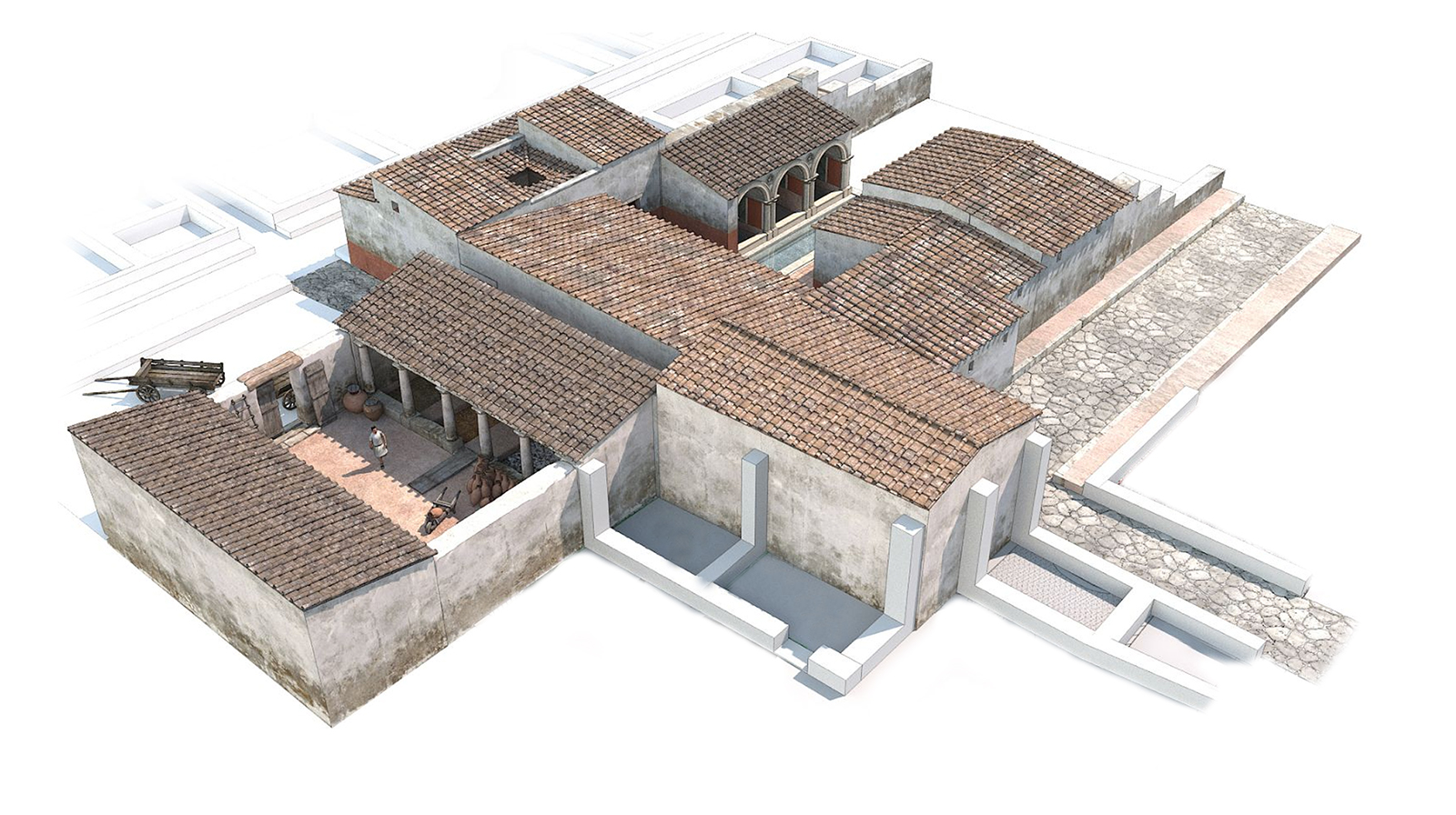
Between 2005 and 2018, several archaeological campaigns in what is now the basement/floor -1 of the Carmen Thyssen Museum in Malaga brought to light the remains of a residential and productive complex, a valuable testimony to the industrial outskirts of Roman Malaca.
This process of research and study, and the subsequent architectural and museographic adaptation of the site for visitors, now allows us to contemplate an exceptional find in Malaga’s urban archaeology, in a remarkably large area (around 700 m2). The site preserves the remains of a factory dedicated to the manufacture of salted fish, several rooms of a domus (house) and a monumental nymphaeum with figurative paintings unique in the province of Málaga, as well as part of the ancient road network in this area of the city and various objects that provide information about daily life in this place, which was occupied continuously from Roman times, before the 1st century AD, until the Byzantine period in the early 7th century.
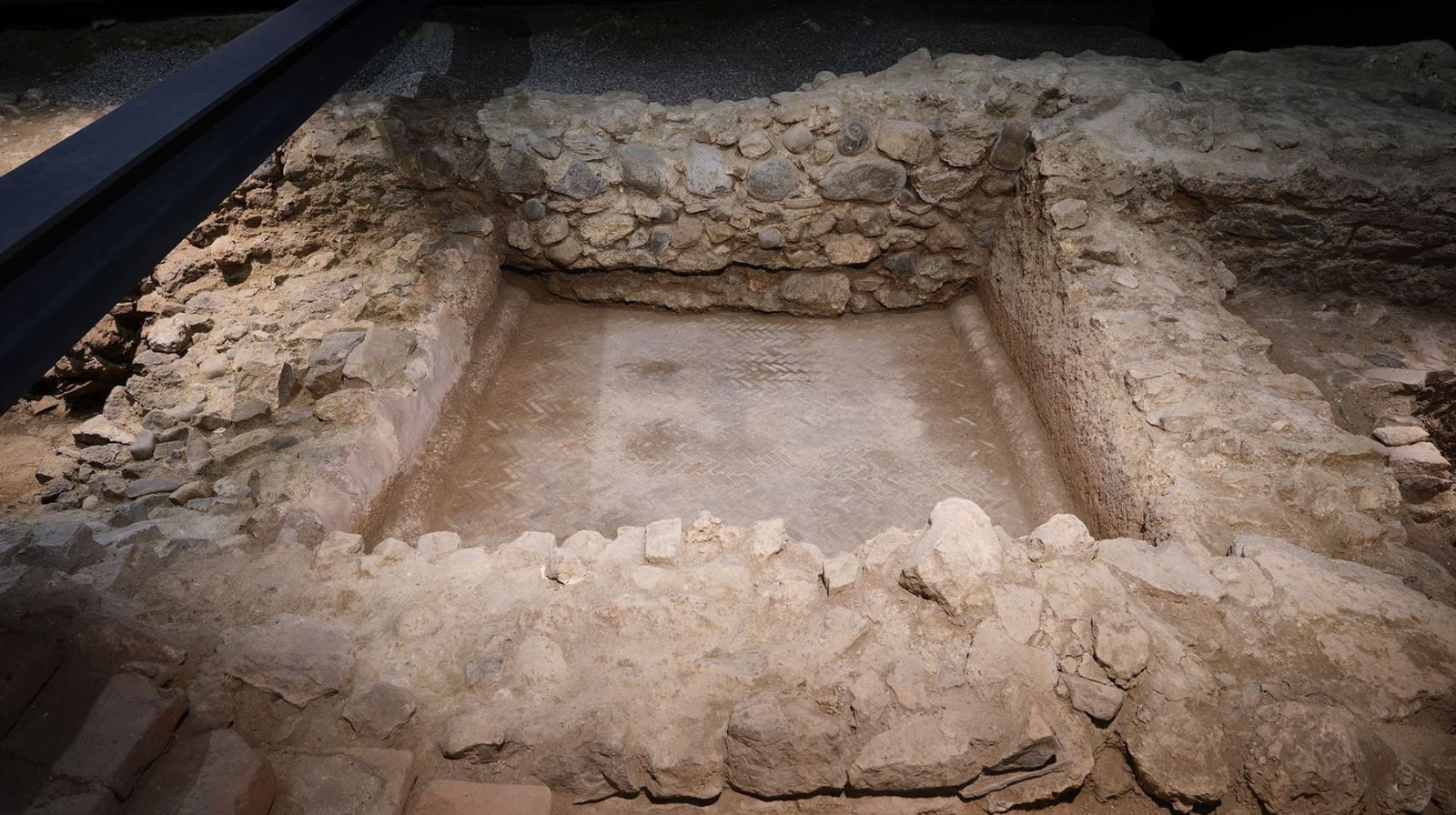
The three pools are located next to a shallow area that may have been a work area for preparing the fish caught, filling the pools and subsequently removing the preserves.
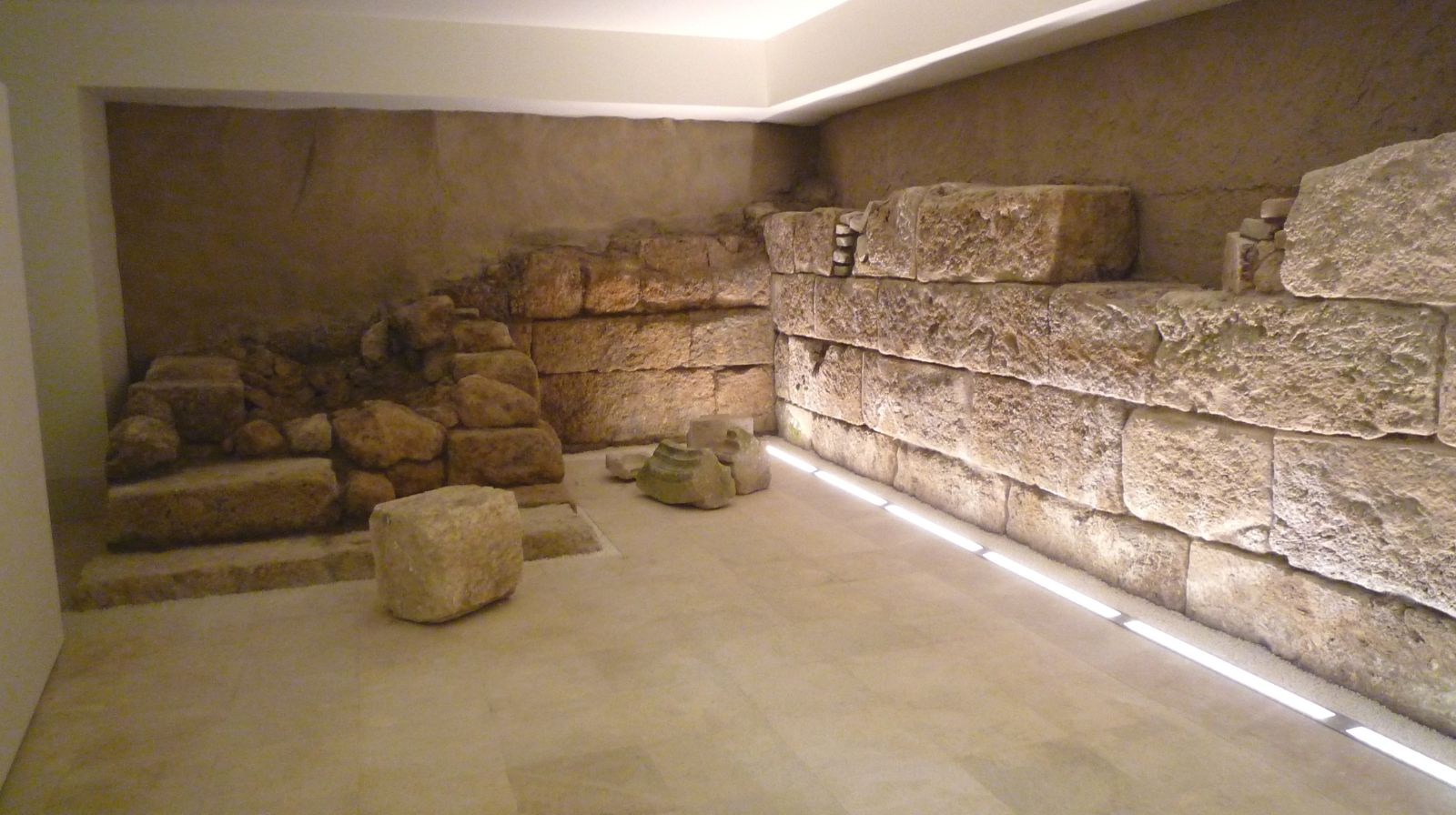
Opus quadratum (ashlar masonry) walls dating from the late 1st century AD. They could be part of the façade of the house belonging to the complex located on this site, in the entrance area where the dominus (owner) received visitors.
One of these structures follows the layout of what is now the Calle Compañía, and a doorway and staircase leading down to the inside are recognisable. The other one has been moved from its original position.
Row of four troughs for producing fish preserves, part of the industrial area of the complex in the late 1st century AD.
This area was separated from the living quarters by a corridor, where the wall delimiting the factory can be seen. The factory ceased operating in the 3rd century for unknown reasons, and only a few troughs continued to be used for household consumption.
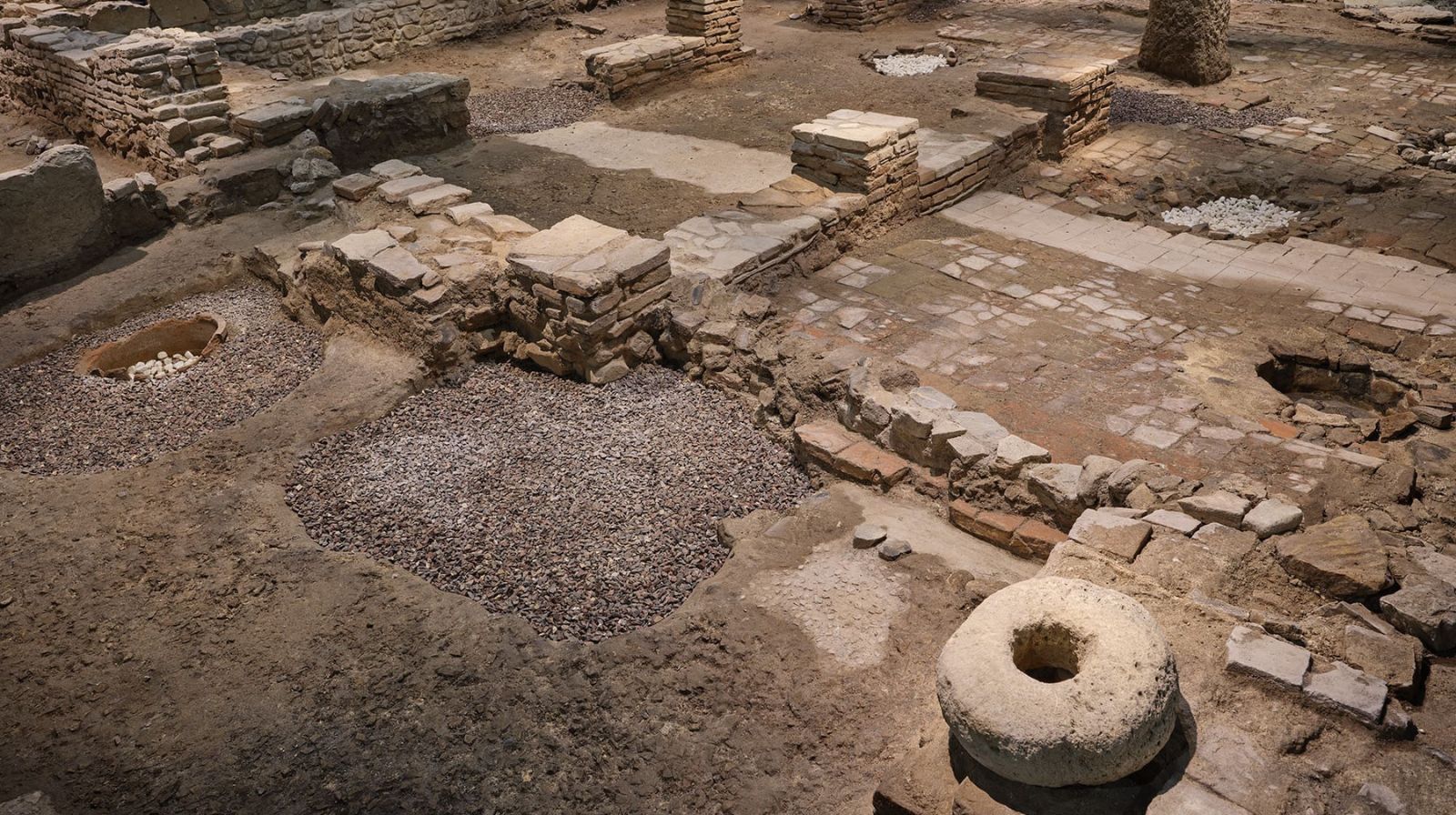
Perspective view of the domus, laid out around a brick-paved courtyard in which several rooms of the living quarters can be distinguished: a possible dining room with a bench around the perimeter (on the right); a porticoed space with brick pillars (further along); what may have been the kitchen, with remains of stoves (opposite); and a space (to the right of the kitchen) connecting it with the factory area.
Most of the surviving remains in this part date from a remodelling carried out in the 3rd century AD, which was based fairly closely on the original design of the 1st-century domestic complex.
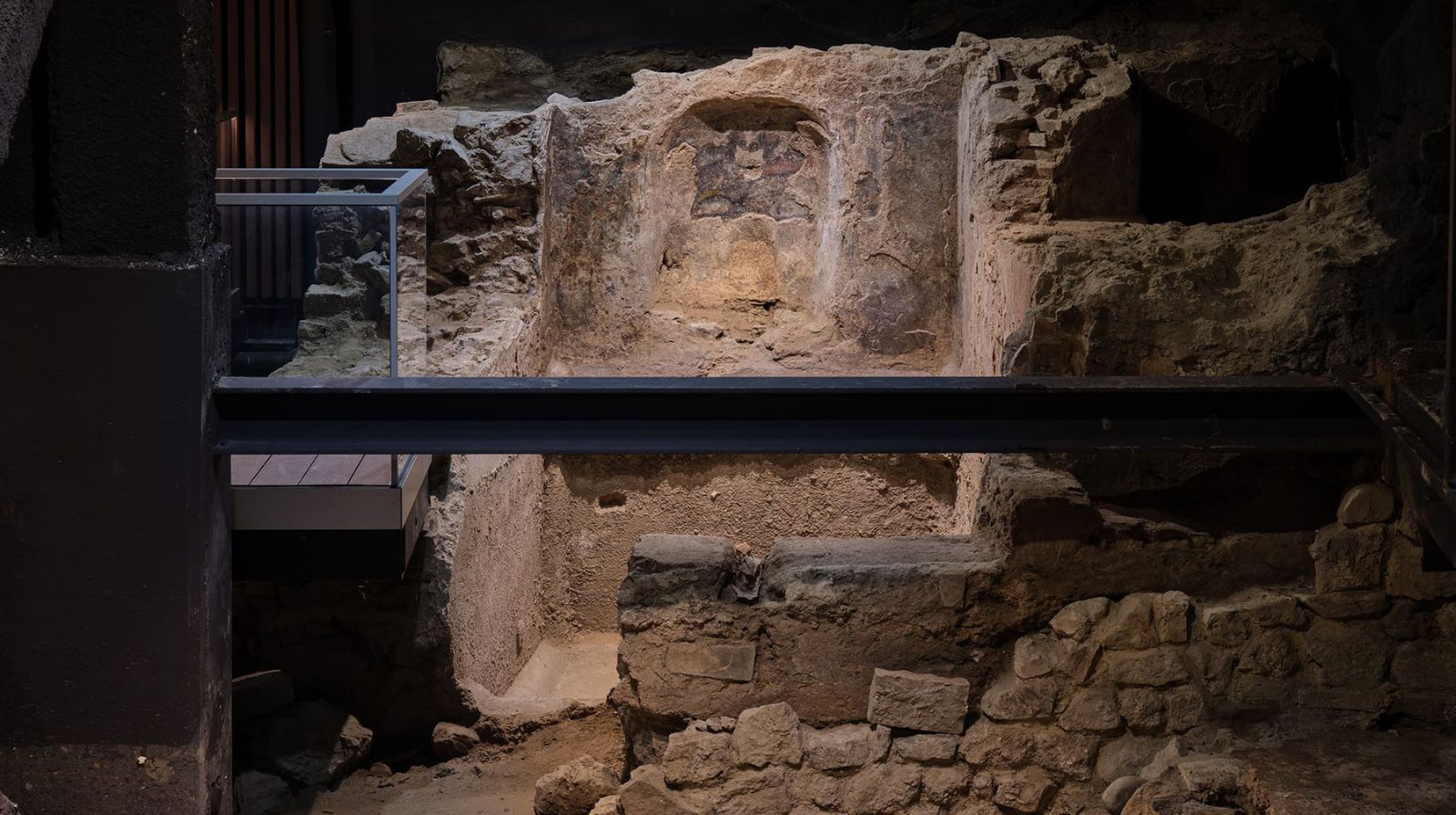
Monumental fountain or nymphaeum in the courtyard of the house, in use from the 1st to the 5th centuries AD. It served a practical purpose (supplying water to the bathroom [lavatrina] and kitchen) and was also a status symbol. It may even have had a religious significance.
The original structure with three aisles, each ending in a niche, has partially survived and was faced with sumptuous materials: marble, geometric mosaics of fine tesserae and pictorial decoration. The most striking painting is in the eastern niche and depicts fish with remarkable naturalism and vivid colours on a black background.
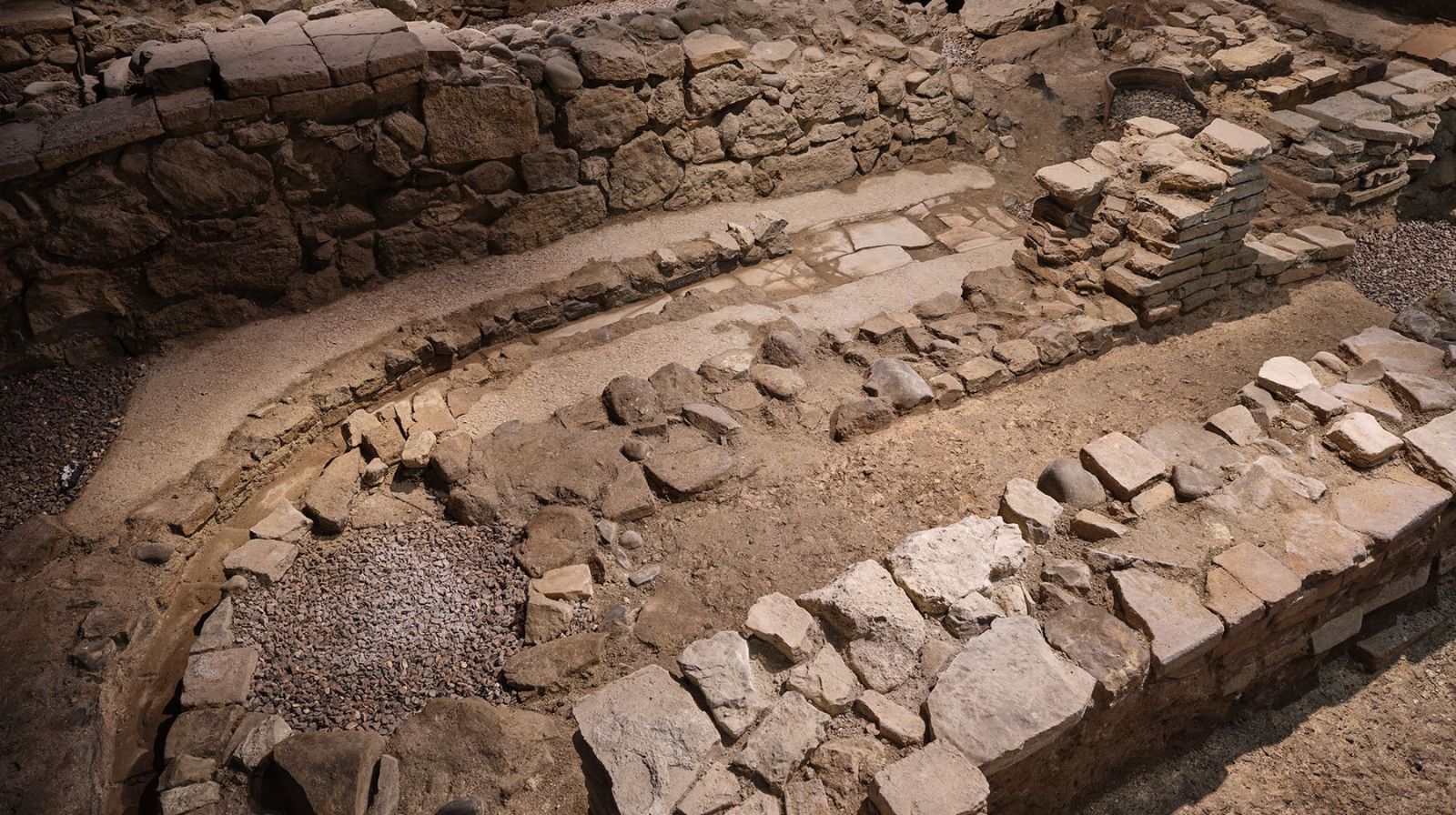
Perspective view of the urban layout to the northwest of the complex. Two streets meeting at right angles delimit the house and factory on this side and suggest a regular and well-planned design, adapted to the practical needs of this expansion area in the periphery of Roman Malaca.
At the intersection of the two streets, a doorway divided into two by a pillar was the entrance to a taberna (shop) selling preserves, which remained in use until the 3rd century.
From this point onwards the streets were reduced in width and gradually taken over for the expansion of the adjacent buildings. The water collection and distribution infrastructure also dates from this period.
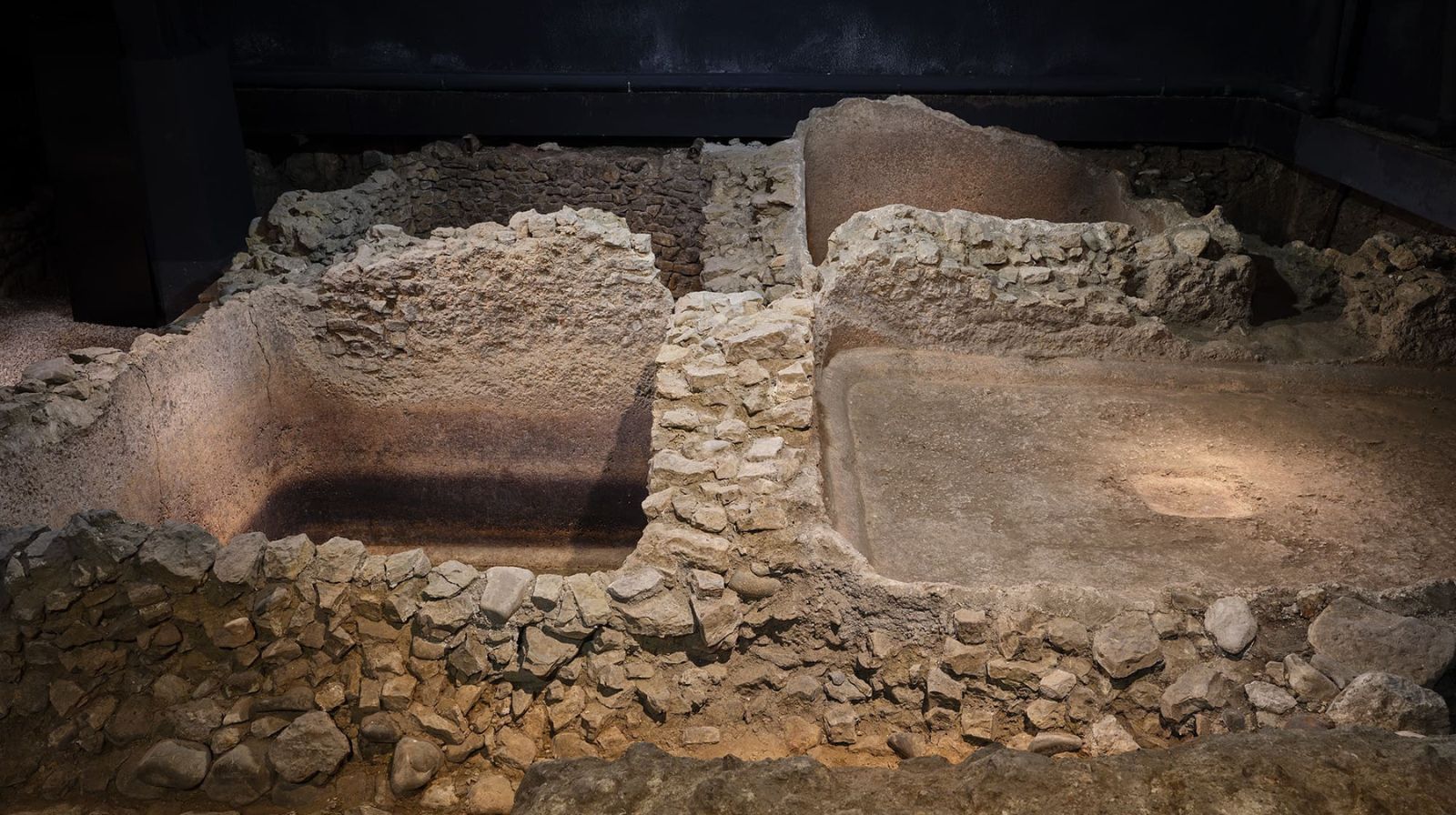
In the second half of the 4th century the structures of the initial buildings were dismantled or adapted to new purposes. In this case, the interior of an earlier construction was used to install new, very deep troughs – an indication of a high volume of activity at a time when Malaca was one of the main ports on the southern coast of the Iberian Peninsula.
The three troughs are located next to a shallow space that may have been a working area for preparing the catch, filling the troughs and subsequently extracting the preserves.
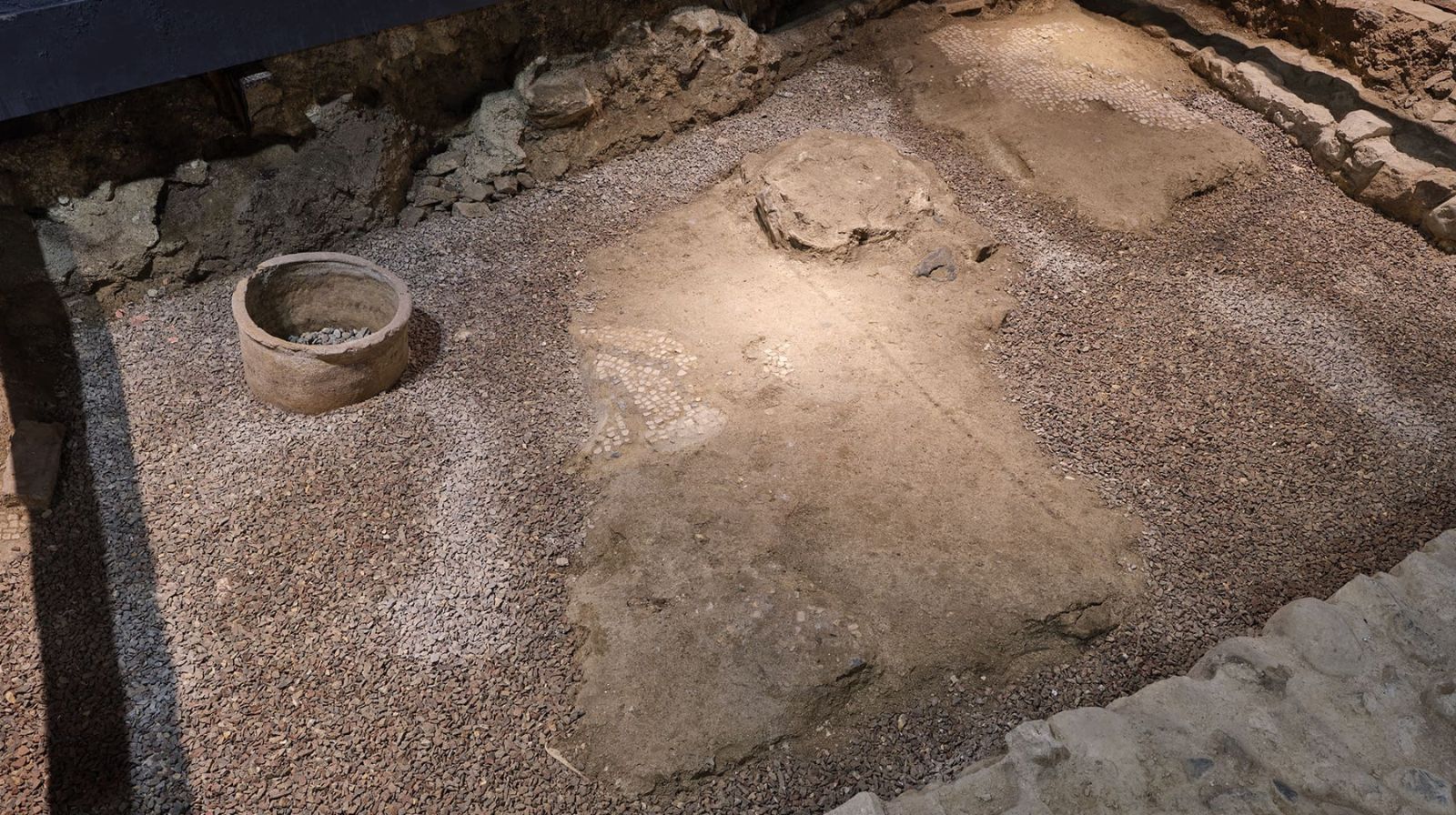
Rooms in the residential area of the complex, following its remodelling in the second half of the 4th century. The former residential and factory premises were dismantled, and these living quarters were built over the remains of the previous troughs. The new architecture was made up of sturdy structures with sumptuous features such as floors with geometric mosaics of black tiles on a white background.
In the Byzantine period, after the permanent collapse of the Roman city, this part of the original complex housed a necropolis, some of whose tombs are still visible today.